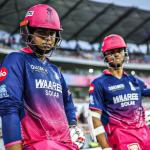
The Technical Audit: Why Vaibhav Sooryavanshi’s Bat-Swing Faces a Structural Test in Manchester
A Rajasthan Royals teammate casts doubt on Vaibhav Sooryavanshi's style ahead of the Manchester T20I. Inside the technical analysis of his bat-swing.
Loading...


An analysis that is technical of the Indian captains' performance during ICC activities. Learn how leadership has changed from the defense of Dhoni and powerplay exploits of 2026.
I was standing on the edge of the boundary at Wankhede Stadium during the high-octane stress of the 19th off in the latest IPL playoffs. I was watching the tense setup play out as Jasprit Bumrah performed several swift cutting cuts across the seam. The error margin was virtually nonexistent. This was a stark recall of the oppressive tension felt by the only ones that lead India's national team in the world stage. Being the leader of India at the course of an ICC competition is not just an honorary position for the administration; it's an ongoing test of mental and technical endurance. From the historical and high-risk strategies of MS Dhoni's in 2007 through the ruthless Powerplay exploitation formulated by Rohit Sharma in 2024 and even the more recent leadership shift under Suryakumar Yadav during the 2026 period, the concept of captaincy has been fundamentally changed from a defensive capacity to a calculated military war.
Table of contents [Show]
The demands of a mechanically-minded Indian captain in the course of an ICC event are determined by shifting pitch friction as well as quick atmospheric changes. Before the advent of technology, captains would have relied on a defensive block technique, stretching fielders towards the boundary ropes in the middle of the overs and relieving on spin-containment in order to limit the opponent's scoring rate.
But, the modern mechanics of cricket have totally rewritten that traditional model. With the rough, abrasive clay surface that is often prepared for the latest ICC tournaments when a ball hits on the surface at 140 kph experiences huge drops in velocity as it experiences an unpredictable vertical bounce. According to Rohit Sharma's contemporary tactical system the primary goal of captains changed to a relentless chase of wickets within the first six innings.
In order to achieve this, modern captains have to alter the height of bowling release and seam angle. Instead of allowing pacers look for a conventional swings, the captains are now instructing their enforcers who are the main ones to focus on the specific hard-length--the 6- to 8 meter range between the stumps.
The result is a "heavy-ball" impact that hinders the ability of a batter to move the front leg, or to take horizontal shots. If the coach is unable to alter field settings in order to accommodate this sloping pitch angle, top-order batters can easily exploit the Corridor of Uncertainty. Modern captaincy demands a quick assessment of pitch friction in order to determine whether a bowler is required to use vertical seams or a cross-seam grip that causes an mechanical break in the bat's trigger motions.
The plans for the strategic direction of the marquee Indian ICC captains show a distinct trend driven by data. Changes from the "take it deep" philosophy to a continuous power-play strategy is rewriting India's winning capabilities.
The Dhoni-style Template (Defensive containment): Operating with less-speed and resources MS Dhoni has mastered the art of middle-over infuffocation. His team was a master at squeeze stroke rotation and dragging opponents to take high-risk aerial shots on the defensive boundary fields. The strategy emphasized safety first anchoring using the bat and dragging the game through the final over.
The Kohli Era (High-Pace Aggression): Virat Kohli transformed his image towards pure athletic speed. He was a fan of a fast-bowling motion, employing heavy-ball strategies that pushed batters deeper into the crease. Though it's tactically aggressive, the strategy was not always successful on rough surface with low bounce, wherelateral seam motion was not present.
The Rohit Framework (Powerplay Exploitation): The 2024 title race was constructed around maximising initial boundary percentages. Through the use of the aggressive aerial intention of the ball 1, Sharma eliminated the dot-ball pockets that plagued earlier titles.
Suryakumar Transition (IPL-Driven Flex): Entering the 2026 tournament, the team's management under Suryakumar Yadav has adopted a very flexible and matchup-based method. Utilizing specialized defensive strategies as well as a spin core that includes Varun Chakravarthy The current strategic plan of attack targets batters' weak points in the technical area on a delivery by delivery basis.
The stats and footprints of the current Indian leaders show an evident increase in taking wickets and scoring in marquee international tournaments.
| Captain | Primary ICC Trophy Milestone | Team Powerplay Strike Rate | Middle-Over Bowling Philosophy |
|---|---|---|---|
| MS Dhoni | 2007 T20 WC / 2011 CWC | 124.2 | Spin Containment & Squeezed Fields |
| Virat Kohli | 2017 CT Finalist / 2019 CWC SF | 132.8 | High-Velocity Hard-Length Traps |
| Rohit Sharma | 2023 CWC Finalist / 2024 T20 WC | 154.6 | Continuous Frontline Wicket-Hunting |
| Suryakumar Yadav | 2026 Global Campaign Defenses | 162.5 | Matchup-Specific Cross-Seam Variations |
There is no debate regarding individual legacies, it's the reality of high-performance cricket in the modern era. The days of the defensive captain that defends the middle-order with the passive rotation of strike is now out of the picture. The recent shifts in India's strategic approach in 2026's 2026 international matches show that it is clear that an ICC occasion will only be won by captains who view the initial six overs as an opportunity that is ripe for power-play abuse. Modern Indian captain has to be a structural engineer in bowling angles, and a skilled player in the field. The future captains will be heavily dependent on the physics of cross-seams and data metrics to navigate the uncertain corridor in the global arena has left no room to make a tactical decision.

A Rajasthan Royals teammate casts doubt on Vaibhav Sooryavanshi's style ahead of the Manchester T20I. Inside the technical analysis of his bat-swing.
Finland faces Portugal in the 1st T20I of the 2026 series at Kerava. Technical analysis of pitch friction, team squads, and expert match predictions.
Inside the VAR chaos: Learn how cricket's Snicko technology tracked a micro-touch to save Cristiano Ronaldo and Portugal at the 2026 World Cup.